
Breast Cancer Treatment in Delhi
Dr. Archit Pandit provides personalised breast cancer treatment in Delhi, including breast-conserving surgery, mastectomy, reconstruction and multidisciplinary cancer care.
Book Appointment
Connect with our specialists for personalised guidance
Advanced Breast Cancer Treatment in Delhi
Personalised Surgical & Multidisciplinary Breast Cancer Care
Breast cancer treatment in Delhi is personalised according to the type and stage of cancer, tumour biology, overall health and individual treatment goals. Dr. Archit Pandit provides comprehensive breast cancer care, including breast-conserving surgery, mastectomy, sentinel lymph node biopsy, breast reconstruction and multidisciplinary treatment.
Patients from New Delhi, Noida, Gurugram, Faridabad, Ghaziabad, and across Delhi NCR consult Dr. Archit Pandit for advanced breast cancer surgery, multidisciplinary care, and expert second opinions.
What is Breast Cancer?
Understanding Breast Cancer
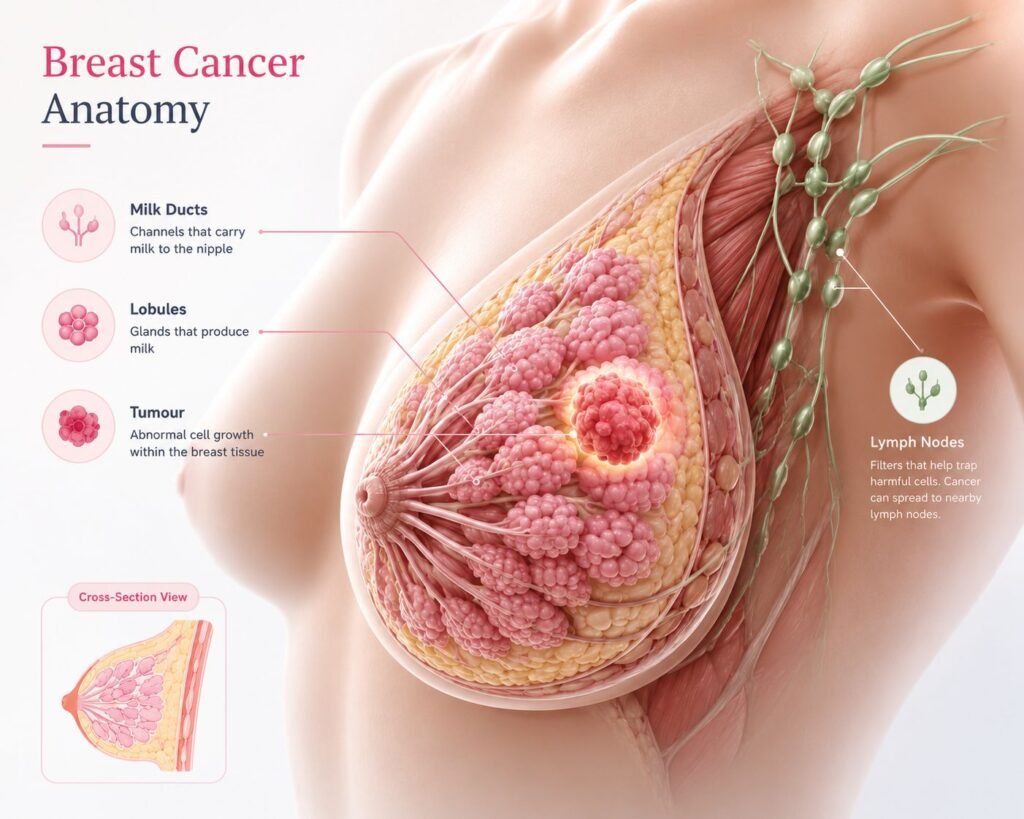
Breast cancer develops when abnormal cells in the breast grow uncontrollably and form a tumour. It usually begins in the milk ducts (ductal carcinoma) or milk-producing lobules (lobular carcinoma) and may spread to nearby lymph nodes or other parts of the body if left untreated.
Early diagnosis through breast screening, mammography, and timely evaluation plays a vital role in improving treatment outcomes. Common symptoms include a breast lump, nipple discharge, changes in breast shape or skin, nipple inversion, underarm swelling, or persistent breast pain.
As a breast cancer surgeon in Delhi, Dr. Archit Pandit provides personalised breast cancer treatment based on the type, stage, and biology of the tumour. Treatment may include breast cancer surgery such as breast-conserving surgery, mastectomy and sentinel lymph node biopsy, breast reconstruction, chemotherapy, radiation therapy, targeted therapy, hormonal therapy, or immunotherapy to achieve the best possible outcomes.
Symptoms of Breast Cancer
The symptoms of breast cancer can vary from person to person and may also occur in non-cancerous breast conditions. If you notice any persistent breast changes, consult a Breast Cancer Surgeon in Delhi for timely evaluation and accurate diagnosis.
Breast lump or thickening
Change in breast size or shape
Bloody or unusual nipple discharge
Skin dimpling or puckering
Redness or swelling of the breast
Persistent breast pain
Lump or swelling in the underarm
Newly inverted nipple
Non-healing ulcer or sore on the breast
Unexplained weight loss (usually in advanced disease)
Types of Breast Cancer Treated in Delhi
Breast cancer can be classified by where it begins, whether it has invaded surrounding tissue, and the molecular characteristics of the tumour. Treatment varies according to the cancer subtype and stage.
Ductal Carcinoma In Situ (DCIS)
Early-stage, non-invasive breast cancer confined to the milk ducts.
DCIS is considered Stage 0 breast cancer and is often detected during routine mammography before symptoms develop. Early treatment offers excellent long-term outcomes.
Invasive Ductal Carcinoma (IDC)
The most common type of breast cancer affecting the milk ducts.
IDC begins within the milk ducts before invading surrounding breast tissue and, in some cases, nearby lymph nodes. Treatment depends on tumour size, receptor status, and stage.
Invasive Lobular Carcinoma (ILC)
Cancer arising from the milk-producing lobules of the breast.
ILC often grows in a diffuse pattern, making it more difficult to detect on examination or imaging. Surgical treatment is planned according to tumour extent and breast anatomy.
Triple-Negative Breast Cancer (TNBC)
An aggressive subtype lacking estrogen, progesterone, and HER2 receptors.
Triple-negative breast cancer may require a combination of chemotherapy, surgery, radiation therapy and, in selected cases, immunotherapy. Treatment is based on the stage, tumour characteristics and individual clinical factors.
HER2-Positive Breast Cancer
Breast cancer is characterised by overexpression of the HER2 protein.
HER2-positive breast cancer may be treated with HER2-targeted therapies alongside surgery and other systemic treatments, depending on the stage and individual clinical characteristics.
Inflammatory Breast Cancer
A rare but aggressive form of breast cancer involving the skin and lymphatic vessels.
Patients often experience redness, swelling, warmth, breast enlargement, and an orange-peel appearance of the skin rather than a distinct breast lump. Early multidisciplinary treatment is essential.
When Should You Consult a Breast Cancer Surgeon?
Early Evaluation Supports Better Outcomes
Consult a Breast Cancer Specialist in Delhi if you:
✔ Notice a breast lump or thickening
✔ Experience bloody or unusual nipple discharge
✔ Observe changes in breast size, shape, or skin
✔ Have persistent breast pain or underarm swelling
✔ Have abnormal mammogram or ultrasound findings
✔ Have a family history of breast or ovarian cancer
✔ Carry a BRCA1 or BRCA2 gene mutation
✔ Have been diagnosed with breast cancer or need a second opinion
Early consultation helps ensure accurate diagnosis, timely treatment planning, and access to personalised treatment options, including breast-conserving surgery whenever appropriate.
How is Breast Cancer Diagnosed?
Accurate Diagnosis for Personalised Breast Cancer Treatment
Clinical Consultation
Assessment of symptoms, medical history, breast examination, and previous medical records.
Mammography & Breast Ultrasound
Imaging tests used to detect breast abnormalities and evaluate suspicious lumps.
Core Needle Biopsy
Confirms the diagnosis and identifies the type of breast cancer through laboratory analysis.
Breast MRI
Recommended in selected patients to assess tumour extent and plan surgery.
Hormone Receptor & HER2 Testing
Determines ER, PR, and HER2 status to guide targeted and hormonal therapy.
Genetic Testing
BRCA1/BRCA2 testing may be advised for patients with a strong family history or hereditary risk.
Early diagnosis allows accurate staging and helps determine the most appropriate treatment. Patients from New Delhi, Noida, Gurugram, Faridabad, Ghaziabad, and across Delhi NCR consult Dr. Archit Pandit for comprehensive breast cancer diagnosis and personalised care.
Breast Cancer Treatment Options in Delhi
Breast cancer treatment in Delhi is personalised based on the type of breast cancer, tumour stage, molecular profile, and overall health.
Breast-Conserving Surgery (Lumpectomy)
Removes the tumour while preserving as much healthy breast tissue as possible in suitable patients.
Mastectomy
Removal of one or both breasts when recommended based on the stage and characteristics of the cancer.
Sentinel Lymph Node Biopsy
Minimally invasive procedure used to determine whether breast cancer has spread to nearby lymph nodes.
Breast Reconstruction
Restores breast shape following mastectomy using implant-based or autologous reconstruction when appropriate.
Chemotherapy
Uses anti-cancer medicines before or after surgery to shrink tumours or reduce the risk of recurrence.
Radiation Therapy
Uses high-energy radiation to destroy remaining cancer cells and lower the risk of recurrence after surgery.
Targeted Therapy
Precision medicines that target specific proteins, such as HER2, in eligible breast cancers.
Immunotherapy
Recommended for selected patients, particularly certain cases of triple-negative or advanced breast cancer.
Take the First Step Towards Expert Breast Cancer Care
Personalised Breast Cancer Treatment in Delhi
If you have noticed a breast lump, abnormal breast changes, have recently been diagnosed with breast cancer, or would like a second opinion, consult Dr. Archit Pandit for a comprehensive evaluation and personalised treatment plan.
Every treatment is based on accurate diagnosis, cancer staging, multidisciplinary decision-making, and evidence-based surgical care, helping patients make informed decisions with confidence.
Breast Cancer Treatment FAQs
Everything You Need to Know About Breast Cancer Treatment
How do I know if a breast lump is cancerous? expand_more
Not all breast lumps are cancerous. Many are caused by benign conditions such as cysts or fibroadenomas. However, any new lump should be evaluated by a breast cancer specialist with a clinical examination, breast imaging, and, if required, a biopsy to determine its cause.
What are the first signs of breast cancer? expand_more
The earliest signs may include a painless breast lump, changes in breast shape or size, nipple discharge, skin dimpling, nipple inversion, or swelling in the underarm. Some patients may not have any symptoms, making regular breast screening important.
When should I see a doctor for a breast lump? expand_more
You should consult a breast cancer specialist as soon as you notice a new breast lump, persistent breast pain, nipple discharge, or any unusual breast changes. Early evaluation helps ensure accurate diagnosis and timely treatment.
Can breast cancer be treated without removing the entire breast? expand_more
Yes. Many patients with early-stage breast cancer are suitable candidates for breast-conserving surgery (lumpectomy), where only the tumour and a small margin of healthy tissue are removed while preserving the breast. Your surgeon will determine whether this is the right option for you.
Is breast cancer curable if detected early? expand_more
Yes. Breast cancer diagnosed at an early stage is often highly treatable. Advances in surgery, chemotherapy, radiation therapy, targeted therapy, and hormonal therapy have significantly improved survival rates and long-term outcomes.
How long does it take to recover after breast cancer surgery? expand_more
Recovery depends on the type of surgery performed. Most patients recover within 2–4 weeks after breast-conserving surgery and 4–8 weeks after mastectomy or breast reconstruction, although recovery varies between individuals.

Dr. Archit Pandit
Dr. Archit Pandit is a Surgical Oncologist and Director & Head of the Department of Surgical Oncology at Fortis Escorts Hospital, New Delhi. With over 15 years of clinical experience, he specialises in the surgical management of gastrointestinal, thoracic, breast, gynaecological, head and neck, and complex cancers. He is trained at AIIMS, New Delhi, with advanced fellowship training in surgical oncology in Japan and colorectal cancer in South Korea. His expertise includes robotic cancer surgery, laparoscopic surgery, HIPEC, cytoreductive surgery, and minimally invasive cancer surgery.
This content is reviewed by Dr. Archit Pandit
 WhatsApp